
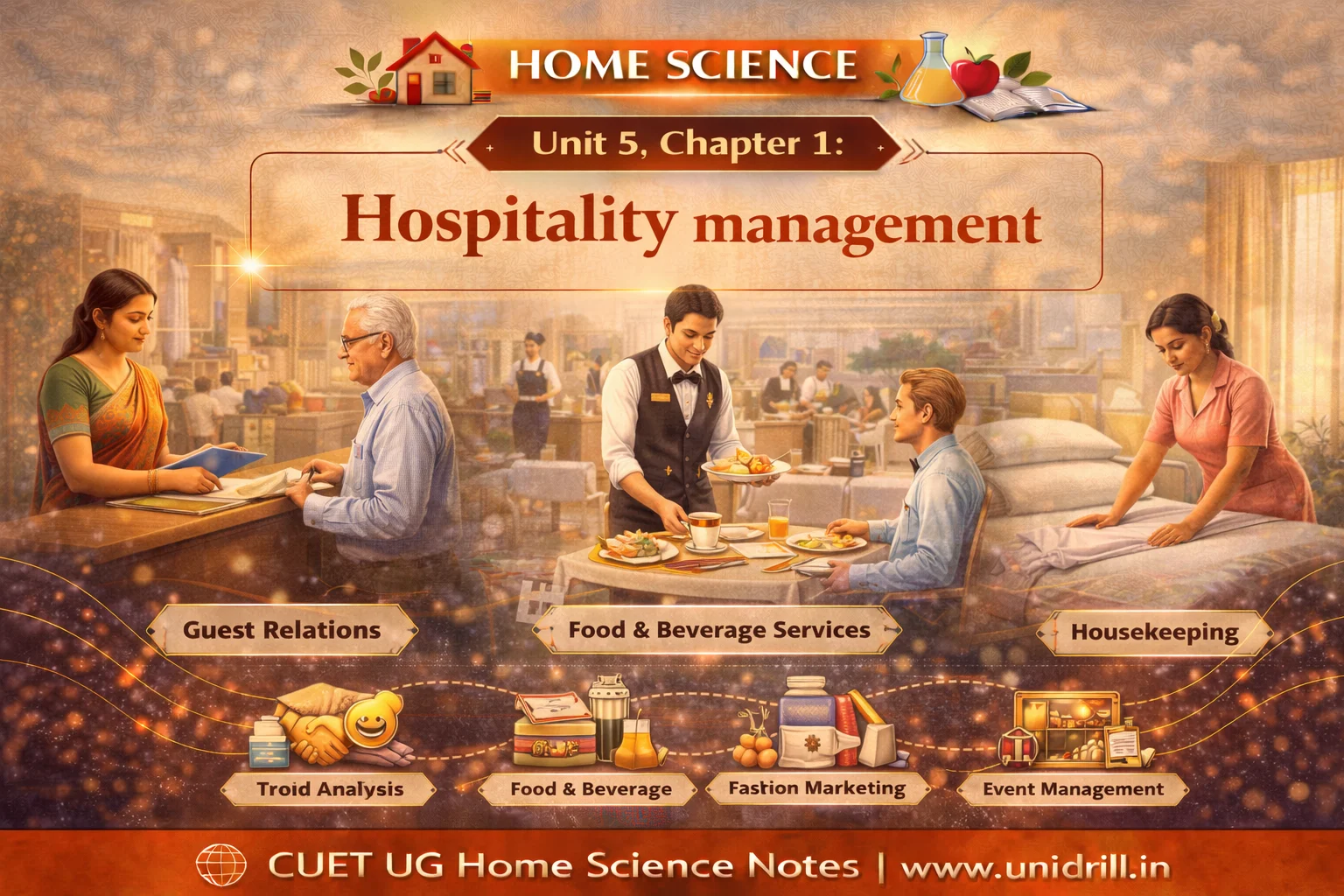
I. Introduction to Hospitality Management
In Indian culture, guests are regarded as God-like, a concept encapsulated in the traditional phrase “Athithi Devo Bhava”.
This philosophy dictates that every guest must be received with warmth and provided with the best possible care and service.
Historically, travellers in India stayed with relatives or in ‘dharmashalas’, but modern trade, commerce, and globalisation have necessitated the provision of paid hospitality services.
Hospitality is defined as the relationship between the guest and the host. It is the practice of being hospitable, which includes a generous reception, entertainment, and providing services with warmth and courteousness.
The industry is primarily concerned with providing accommodation, food, and other facilities to make a guest's stay comfortable. Due to its focus on providing a “Home Away From Home,” hospitality has become one of the fastest-growing industries globally.
II. Significance of the Hospitality Industry
With the advent of globalisation, the world has become more interconnected, leading to increased travel for various reasons:
Business and Official Purposes: Marketing products or attending meetings.
Education and Study: Students travelling for higher learning.
Pilgrimages: Religious travel to sacred sites.
Medical Tourism: Seeking healthcare services in different regions.
Leisure and Vacation: Enjoying heritage monuments, wildlife tours, and cultural festivals like the Pushkar Mela or the Dusshera festival in Mysore.
Because tourists stay temporarily in unfamiliar places, they require comforts and facilities similar to what they have at home.
If an establishment fails to provide a safe, comfortable, and hygienic environment, the guest carries away unpleasant memories and is unlikely to return.
III. Types of Hospitality Establishments
Various establishments offer specialised services based on the needs of the traveller:
Hotel: A commercial establishment offering lodging, meals, and other services.
Motel: Similar to a hotel but specifically provides parking facilities near the rooms or room doors that open directly onto a parking lot.
Lodge: Offers rented accommodation primarily for sleeping and may not provide food or other services.
Resort: Known for its leisure attractions, offering a broad range of amenities, sports facilities, and activities for a total vacation experience.
Furnished Apartments: Provide all essential amenities needed by a guest for a longer stay.
Furnished Camps: Provide hospitality for those undertaking adventure sports or hiking.
Hospitality services are also integral to cruise lines, theme parks, hospitals, guest houses, and hostels.
IV. The Guest Cycle
To manage a hospitality establishment efficiently, one must understand the “Guest Cycle,” which begins before the guest even steps into the hotel. It consists of four distinct stages:
Pre-arrival Stage: Activities include quoting rates for the guest and reserving a room through a central reservation system.
Arrival Stage: The guest physically arrives, registers, and checks-in.
Occupancy: The hotel provides various services based on the guest's requirements while ensuring their security. The focus here is guest satisfaction to encourage customer loyalty.
Departure: The final stage where the guest checks-out. The hotel maintains an up-to-date ‘guest history’ including feedback on the services provided.
V. Functional Departments in Hospitality
Smooth functioning requires the coordination of several departments.
A. Front Office The Front Office is the focal point of any hotel and the domain where the guest cycle largely takes place. It is the first point of contact between the guest and the staff, making it critical for image building.
Primary Services: Welcoming and greeting guests, managing room reservations, registration and room allocation, maintaining check-in/check-out records, issuing keys, and settling bills.
Coordination: The front office coordinates with the transport, accounts, billing, room service, and housekeeping departments.
Key Designations:
Front Office Manager: Responsible for managing the lobby and transport, scheduling shifts for 24-hour operations, and coordinating with housekeeping.
Receptionist (Front Office Agent): Reserves and registers rooms.
Front Office Cashier: Maintains bills and receives payments during check-out.
Telephone Operator: Provides information to in-house guests and visitors.
Lobby Manager: Supervises all uniformed services.
Bell Captain and Bellboys: Responsible for baggage movement.
Doorman: Welcomes guests upon arrival.
B. Housekeeping Department This department is primarily responsible for providing a healthy environment by ensuring high standards of cleanliness and hygiene throughout the establishment.
Core Functions:
Cleaning public areas (foyer, lobby, banquet halls) and guestrooms.
Supply and upkeep of laundry, linen, and uniforms.
Internal flower arrangements and maintenance of the external landscape or garden.
Coordination with other departments through a control desk.
Pest control.
Managing the ‘Lost and Found’ section for misplaced guest luggage.
Hierarchy:
Executive Housekeeper: Judiciously manages manpower, materials, and money.
Assistant Housekeeper: Prepares duty schedules and monitors cleanliness for each shift.
Desk Control Supervisor: Manned 24 hours to transmit information between guests and staff.
Floor Supervisor: One for each floor, responsible for guest rooms, corridors, and floor pantries.
Room Attendant: Performs actual cleaning of rooms and bathrooms.
Housemen: Handle heavy cleaning tasks like vacuuming and shifting furniture.
Linen Room Supervisor: Responsible for the acquisition and cleanliness of all linen and uniforms.
C. Food and Beverages (F&B) Department Responsible for the sale of food and beverages across various service departments like kitchens, restaurants, banquets, and room service.
Kitchen: The place where food is prepared. Large hotels have independent sections like butchery, bakery, and pantry. The Executive Chef (Chef-de-cuisine) is the head of the kitchen.
Kitchen Stewarding: Concerned with the storage, maintenance, and cleanliness of cutlery, crockery, and glassware.
Restaurant: A commercial facility providing dining tables, linen, and décor. The Restaurant Manager oversees overall functioning, while stewards/waiters provide actual service to the guests.
D. Support Service (Back Office) Departments These departments are essential for overall management: Finance and Accounts, Engineering, Human Resources (HR), and Sales and Marketing.
VI. Management Functions in Hospitality
Effective management involves several integrated functions:
Planning: Defining goals and the means to achieve them.
Organising: Arranging resources and tasks.
Staffing: Recruiting and training the right personnel.
Co-ordinating: Ensuring different departments work together harmoniously.
Directing: Leading and motivating the workforce.
Controlling: Ensuring that plans and objectives stay within schedules and allocated budgets.
Evaluating: Assessing the use of resources in light of institutional goals.
VII. Environmental Conservation and Eco-friendly Practices
Modern hotels are increasingly adopting sustainable practices to conserve natural resources:
Green Materials: Using 100% organic cotton bed sheets.
Sustainable Laundry: Implementing chemical-free laundry cycles and using agents that are non-toxic, hypoallergenic, and biodegradable.
Resource Saving: Placing cards in rooms urging guests to reuse towels to save water and electricity.
Energy Efficiency: Using energy-efficient light bulbs in guest rooms.
VIII. Preparing for a Career in Hospitality Management
The hospitality industry is a fast-growing sector with ample opportunities, especially for youth, who are preferred for their high energy, openness to new technologies, and ability to work long hours.
Essential Competencies:
Grooming and Hygiene: Staff must be well-groomed with clean, manicured nails and neatly pressed uniforms.
Soft Skills: A cheerful attitude, self-discipline, courtesy, and a smiling face are vital.
Communication: Effective communication skills and proficiency in multiple languages are highly advantageous.
Physical Fitness: Essential for working long shifts.
Educational Pathways: Various institutes offer courses ranging from certificates and diplomas to undergraduate and postgraduate degrees in Hotel Management.
Career Avenues:
Positions in housekeeping departments at various hierarchical levels.
Roles in the Front Office and reception/control desks.
Specialisation in theme-based event management within an organisation.
Entrepreneurial opportunities in housekeeping consultancy, commercial laundry services, or the supply of flower arrangements.
Management roles in institutional settings like hospitals, hostels, and old age homes.